


Depression treatment in Lawrenceville, GA at Purple Recovery Center for Men starts with one question: what has changed for you? Maybe you stopped caring about the gym or your kids’ games. Or you sleep 10 hours and still wake up tired. A man can come to us for depression alone, with no drinking or drug problem required. You meet with a licensed therapist and a group of other men on one campus in Gwinnett County. We start with your history.
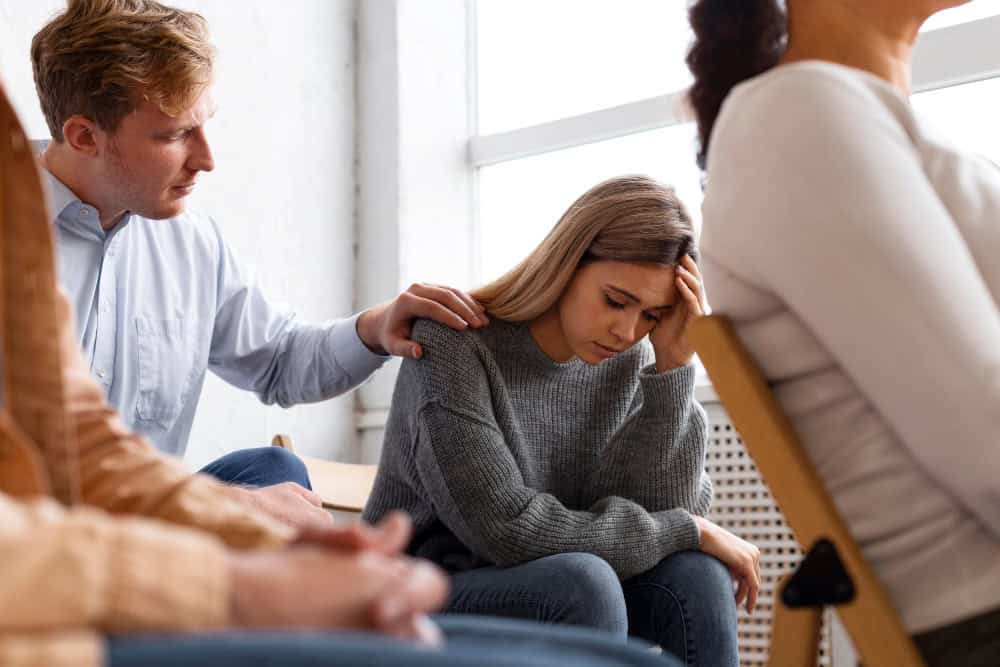
What Depression Looks Like in Men
Depression in men shows up as more than sadness. Plenty of men never say the word “sad” at all. Instead, the fuse gets shorter, and small problems at work or at home turn into fights. Energy drops. The couch wins most nights. Food tastes like nothing, or you eat without noticing. Sleep goes one of two ways, either too little or far too much.
A depressive episode also changes how you think. Concentration slips. Reading the same page twice becomes normal. You may feel guilty over things you cannot name, or believe your family would be better off without you around. Some men notice aches, headaches, or stomach trouble with no clear cause. When several of these signs last most of the day for 2 weeks, it counts as a depressive episode.
Types of Depressive Disorders We Treat
We treat the depressive disorders men bring to us most often. Major depressive disorder is the one you probably picture. It means a low mood or loss of interest nearly every day for at least 2 weeks. Persistent depressive disorder runs lower and longer. The mood stays flat for 2 years or more, and a man starts to believe it is just his personality. Depression with anxious distress adds restlessness and worry on top of the low mood. Our depression disorder treatment in Georgia starts by naming which type you have, so the plan fits it.
What the Numbers Say About Men and Depression
Men get depression less often than women on paper, and they get help for it less often too. A March 2026 SAMHSA short report on the 2022 to 2024 NSDUH puts the past-year rate of major depressive episodes among adult men at 6.6%. For women, the figure was 10.3%. The same report found 3.2% of men had both a substance use disorder and a major depressive episode. Those men are in our groups every day.
Treatment rates tell the second half of the story. The most recent available data from the National Institute of Mental Health show 61% of adults with a major depressive episode got treatment. Nearly 4 in 10 did not. Some assumed a bad stretch would pass on its own. For many men, it never does, and they don’t call us until months later.
Warning Signs That Mean It Is Time to Get Help
Get help for depression when it starts costing you things you cannot get back. Missed shifts count. A partner who has stopped asking how you are counts too. Drinking to fall asleep, or using something to feel anything at all, belongs on the list. If drinking or drug use is part of how you cope, we treat both conditions together through dual diagnosis care. Which problem came first can be sorted out after you call.
Some signs need a same-day response. Thoughts of death, giving away things you own, or a plan to hurt yourself are emergencies. Call or text 988, the Suicide and Crisis Lifeline, or go to the nearest emergency room. Then call us once you are safe. We will talk through how depression treatment in Lawrenceville, GA works from there. A parent or partner can make the first call for you and get the same answers.
How Depression Treatment Works at Purple
Your depression treatment here starts with a phone call. An admissions coordinator asks what has been going on and how long it has lasted. Then comes the assessment. Our clinical team uses it to recommend a level of care. Men who need a full day come 5 days a week. Those still working choose a daytime or evening track. Every option happens on our one campus in Lawrenceville. All of our mental health services share the same team and intake process. Nothing gets decided without you.
Your plan includes medication support coordination when it fits. Programs run for 30 days to 6 months. A lot of men get the most benefit from the 90-day program. Several members of our team are in recovery themselves. They know how it feels to sit in the first group and say nothing.
Therapies We Use to Treat Depression
Our depression treatment center in Lawrenceville, GA uses cognitive-behavioral therapy (CBT) as the base of most plans. CBT is talk therapy with a method. You learn to catch the thought behind the mood, test whether it is true, and choose a different action. Licensed therapists run it in individual sessions, which are typically weekly, and in group. The lead clinician also uses EMDR, a therapy for trauma memories, when your history calls for it. Each therapy below has its own name here.
- Personalized Care is our individual therapy. You and your therapist map where the depression started and the habits keeping it going. The plan changes as you change.
- Healing the Wounds is our trauma therapy. It is trauma-informed, which means it accounts for how past events affect your stress and your ability to trust. Old losses and old fights tend to surface once the depression is on the table.
- Family Recovery is our family therapy, run through the Purple Family Program. Those closest to you learn how depression works and how to respond without walking on eggshells. You practice the harder conversations with a family coordinator in the room.
Therapy happens in more than the therapy room. Purple provides your gym membership. From there, you can join offsite activities like hikes, swimming, sporting events, and camping trips. Each one is practice at showing up when you’d rather stay home. Foundations for Living, our life skills program, adds self-care and emotional regulation, time management, and goal setting.
Levels of Care for Depression Treatment in Georgia
We offer depression treatment in Georgia at 3 levels, and all 3 run on the same Lawrenceville campus. The right one depends on how much the depression is running your days. A man who cannot get out of bed needs more of our hours than a man losing only his evenings. Each snapshot below shows what a week looks like.
Partial Hospitalization Program (PHP):
A full treatment day, Monday through Friday, 9 a.m. to 2 p.m. PHP fits men whose depression has stopped work or school.
Intensive Outpatient Program (IOP):
A daytime track, Monday through Friday, 9 a.m. to noon, or an evening track starting around 6 p.m. Attend 3 to 5 sessions a week around your job.
Outpatient (OP):
The least intensive level, with minimal schedule demands. OP is for men stepping down from IOP or starting lighter.